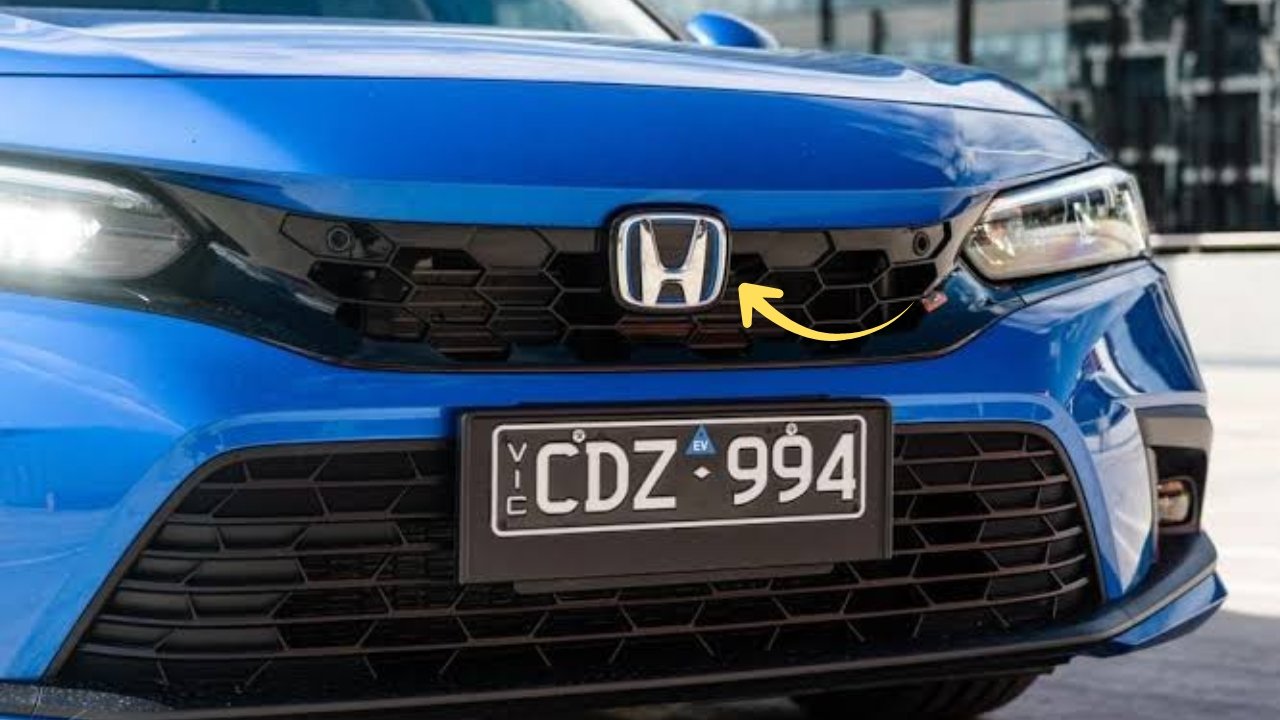
Honda Australia is experiencing one of its strongest sales periods in recent memory, with new vehicle orders climbing to a four-year high on the back of a deliberate and well-timed shift toward more affordable hybrid technology. The brand recorded sales growth of 10 per cent in 2025 and is targeting a further 10 per cent increase in 2026, a trajectory that reflects both improved consumer confidence in hybrid powertrains and Honda’s own willingness to make electrified motoring less financially out of reach. For years, Honda’s e:HEV models sat at the top of each model range with price tags that kept many practical-minded buyers at arm’s length. That is now changing, and the numbers are beginning to show why this pivot matters.
The Shift That Made the Difference
The turning point for Honda in Australia was a conscious decision to bring hybrid technology further down the price ladder rather than keeping it as a flagship-only option. March 2025 proved to be the brand’s best single sales month in four years, followed by similarly strong results in June, when 50 per cent of all Honda vehicles sold were hybrids. That proportion is remarkable given that, for much of 2024, only the top trim of models like the CR-V offered a petrol-electric option. Hybrid models made up 53 per cent of Honda’s Australian sales across May and June 2025, which actually outpaced market leader Toyota Australia, where hybrids accounted for 46 per cent of sales in the first half of the year. When a brand relatively new to the volume hybrid conversation begins outselling Toyota in electrified mix, it signals something meaningful is underway.
What the New Hybrid Lineup Actually Looks Like
Honda’s strategy has been to expand its e:HEV system across more grades of existing models rather than wait for entirely new vehicles. The 2026 ZR-V update is the clearest example of this. The outgoing ZR-V lineup consisted of three turbo-petrol variants and a single hybrid, but the 2026 range flips that formula: only the entry-level VTi X retains the petrol engine, while three of the four variants now use the e:HEV system. The pricing restructure is equally significant. The entry price for the ZR-V e:HEV has dropped by $11,500 compared to the start of 2025, and the flagship e:HEV LX has also been reduced by $3,000 to $51,900 drive-away.
The CR-V has undergone a similar transformation. Honda recently updated the CR-V so it is now available in four e:HEV variants, up from just one previously, bringing the price of hybrid power down dramatically across the mid-size SUV segment.
Here is a snapshot of the updated 2026 Honda ZR-V hybrid lineup and its drive-away pricing:
| Model | Powertrain | Drive-Away Price |
|---|---|---|
| ZR-V VTi X | 1.5L Turbo Petrol | $39,900 |
| ZR-V e:HEV X | e:HEV Hybrid | $43,400 |
| ZR-V e:HEV L | e:HEV Hybrid | $45,900 |
| ZR-V e:HEV LX | e:HEV Hybrid | $51,900 |
Why Australian Buyers Are Responding Now
The appetite for hybrid vehicles in Australia has been building for several years, but affordability has always been the sticking point. Many buyers were willing in principle but hesitant when the hybrid premium stretched into the tens of thousands of dollars. Honda’s revised pricing strategy directly addresses that friction. Honda Australia’s director of automotive Robert Thorp noted that Australians are choosing hybrids in record numbers, and expressed confidence that the e:HEV system offers class-leading performance and economy.
Beyond Honda, the broader market trend supports this shift. Honda Australia’s managing director has pointed out that while battery electric vehicle growth has plateaued and internal combustion engine sales are declining, all meaningful market growth is currently occurring in the hybrid segment — a clear reflection of what customers actually want right now. Honda’s timing, then, is not accidental. The brand spent several years building hybrid credibility at the top of the market and is now using that reputation to justify expansion across more accessible price points.
Hybrids, EVs, and the Prelude’s Return
Honda’s ambitions for 2026 extend well beyond the ZR-V and CR-V updates. The brand forecasts that 80 per cent of its Australian sales will be hybrid by 2026, potentially rising even higher. To put that in context, Honda Australia is targeting more than 15,000 total vehicle sales this year, which would be its best result since adopting an agency sales model in mid-2021. On the electric vehicle side, the company has also confirmed the return of the Honda Prelude as a hybrid sports model for Australian release in 2026, alongside the brand’s first-ever battery electric vehicle. While neither is expected to be a volume product, both signal that Honda is carefully curating a future lineup that balances efficiency, driver appeal, and real-world accessibility.
Honda Australia traces its hybrid history back to 2001, when the original Insight became the first hybrid vehicle sold in the country — a lineage of over two decades that gives the brand genuine authority when making claims about its e:HEV technology. That experience is now being translated into a product strategy that appears to be landing with Australian buyers at exactly the right moment.
FAQs
Q: What is Honda’s best-selling hybrid model in Australia?
The CR-V is Honda’s strongest performer and the brand’s biggest growth focus for hybrid sales.
Q: How much does the cheapest Honda hybrid SUV cost in Australia?
The Honda ZR-V e:HEV X starts from $43,400 drive-away as of the 2026 update.
Q: Are Honda hybrids eligible for Australia’s New Vehicle Efficiency Standard (NVES)?
Yes, Honda’s e:HEV models benefit under the NVES framework, which rewards lower-emission vehicles.
Q: When is Honda launching its first electric vehicle in Australia?
Honda has confirmed its first battery electric vehicle for Australia will arrive in 2026, alongside the new Prelude hybrid.