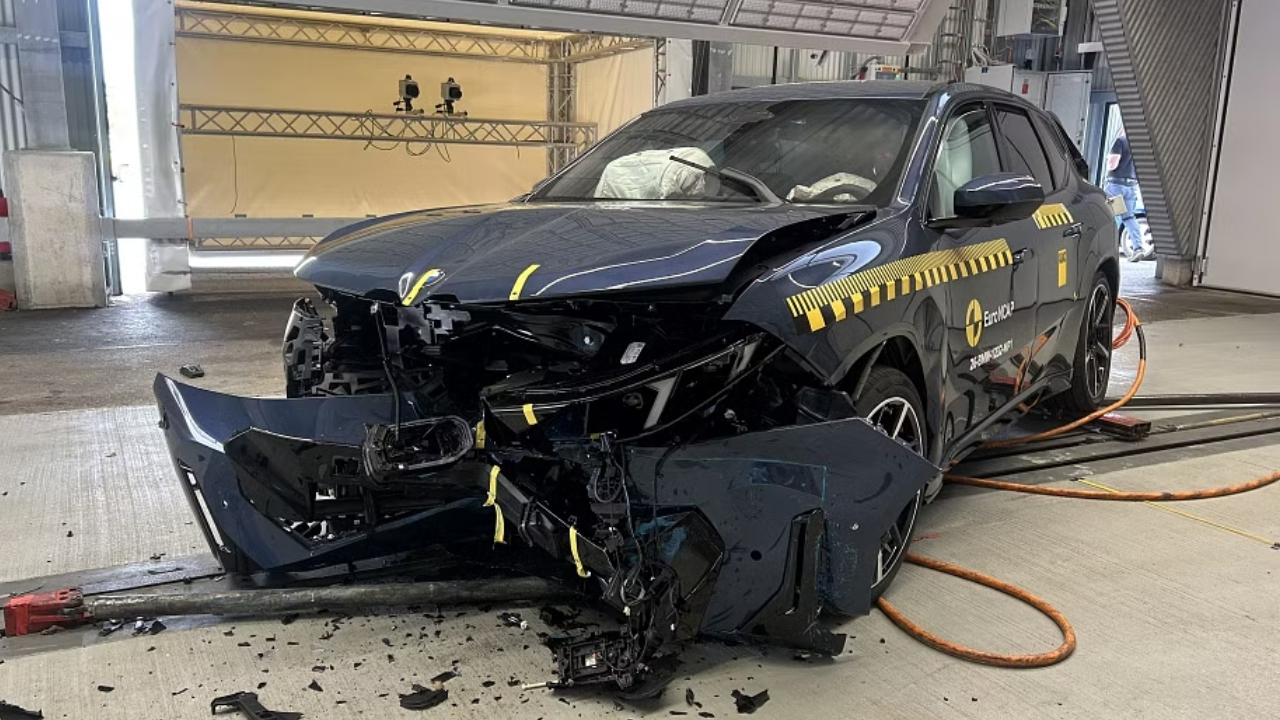
If you’re planning to buy a new car in Australia this year, the way vehicles are tested for safety has changed in a significant way. The Australasian New Car Assessment Program (ANCAP) officially rolled out its revised 2026–2028 testing protocols on January 1, 2026 — the most far-reaching update the organisation has introduced since 2018. These aren’t minor tweaks. The changes rebuild the entire framework from the ground up, reshaping how manufacturers design vehicles and how buyers should interpret safety star ratings going forward.
From Four Categories to Four Stages: How the New Framework Works
ANCAP has moved away from its previous scoring categories — Adult Occupant Protection, Child Occupant Protection, Vulnerable Road User Protection, and Safety Assist — and replaced them with a concept called the Stages of Safety. Developed in collaboration with its European counterpart, Euro NCAP, this new model follows what happens before, during, and after a crash, drawing from the internationally recognised Haddon Injury Prevention Matrix.
The four new pillars are:
- Safe Driving — technologies that help drivers stay in control and avoid dangerous situations
- Crash Avoidance — the real-world performance of systems like autonomous emergency braking (AEB), lane support, and forward collision warning
- Crash Protection — how well the vehicle physically shields occupants and bystanders during an impact
- Post Crash — what happens in the critical minutes after a collision, including emergency response and EV battery risk
Each stage is now scored out of 100 points, expressed as a percentage, and a vehicle must clear minimum thresholds in every single stage to earn a five-star rating. Doing brilliantly in one area can no longer paper over a weak result in another.
The Biggest Changes You Need to Know About
Several specific additions within the new protocols stand out as genuinely meaningful shifts in how vehicles will be evaluated.
Irritating driver assist systems will cost manufacturers points. ANCAP will now penalise lane-keeping systems that feel jerky or aggressive, and will assess how gently or intrusively a car’s safety technology intervenes. Systems that distract rather than assist — including overcomplicated touchscreen menus replacing physical buttons — will drag a vehicle’s Safe Driving score down. ANCAP has explicitly called on manufacturers to bring back physical controls for critical functions like indicators, headlights, and wipers.
Seat failures carry severe consequences. Following a seat collapse during an MG3 crash test in 2025 that drew wide criticism, any seat or seat rail failure in testing now triggers an automatic 50% loss of points in the Crash Protection stage — effectively ruling out a five-star result.
EV and hybrid battery fire risk is now formally assessed. With electrified vehicles making up roughly one quarter of new car sales in Australia, ANCAP’s 2026 protocols introduce testing around whether high-voltage batteries catch fire after an impact, how occupants are warned, and whether the hazard is clearly signalled externally for first responders. A lesser-known risk is also addressed: thermal runaway, which can cause a dangerous fire in the days or weeks following a crash rather than immediately on impact.
ANCAP 2026 Stages of Safety: At a Glance
| Stage | Focus Area | Key Elements Assessed |
|---|---|---|
| Safe Driving | Before the crash | Driver monitoring, speed assist accuracy, touchscreen/button controls |
| Crash Avoidance | Preventing the crash | AEB, lane support, night/rain performance, pedestrian detection |
| Crash Protection | During the crash | Structural integrity, airbags, seat performance, child restraint testing |
| Post Crash | After the crash | eCall systems, electric door handles, EV battery fire, rescue guides |
Each stage is scored out of 100 and expressed as a percentage. Minimum thresholds apply in all four stages.
Emergency Call Systems and the Post-Crash Golden Hour
One of the most practical additions to the new framework is the greater weight placed on eCall technology — systems that automatically contact emergency services following a serious collision. In Australia, more than 40% of new vehicles sold in 2024 already carried this capability, yet in New Zealand the figure sits below 10%, highlighting a gap ANCAP is actively working to close.
RACV’s Head of Policy, James Williams, noted that the ratings remain the most straightforward way for buyers to compare vehicle safety, and the new Post Crash stage adds a layer of real-world relevance that the previous framework lacked. Two-thirds of Australian road fatalities occur in rural and remote areas, where every minute of delayed emergency response can make the difference between survival and death. Beyond eCall, post-crash testing will also examine whether electric door handles — a design trend that has grown rapidly — can actually be operated to allow rescue teams access when the vehicle loses power.
More real-world road testing has also been introduced to evaluate how well a vehicle’s safety technology reads and responds to actual road conditions in Australia and New Zealand, rather than only performing in controlled test-track environments.
What This Means When You Buy a New Car
The first official ratings under the 2026 protocols are expected to be published in July 2026, meaning car buyers will soon be able to compare vehicles on the new system. It’s worth noting that ANCAP ratings carry a date stamp and remain valid for six years — so a 2019-rated vehicle like the Mazda CX-30 or Kia Seltos saw its rating expire at the start of 2026, and those cars are now classified as unrated if still sold new.
For buyers, the shift to percentage scores within each stage offers more transparency than a simple star rating. A car that just scrapes five stars overall may now reveal weaker performance in a specific stage like Post Crash, allowing for a more informed comparison. For manufacturers, the bar has been raised in a tangible way — particularly around driver assistance quality, physical controls, and EV safety — and early engagement with ANCAP during development is now more important than ever.
The 2026–2028 protocols represent a genuine step forward, not a cosmetic rebrand. Whether you’re buying a budget hatchback or a family SUV, the star rating on a new Australian vehicle now means something more comprehensive than it did twelve months ago.
Frequently Asked Questions
When did the new ANCAP rules officially begin?
The 2026–2028 protocols came into effect on January 1, 2026, with the first ratings expected in July 2026.
Can a car still get five stars if it scores poorly in one stage? No — vehicles must meet minimum score thresholds in all four stages to achieve a five-star rating.
Do the new rules apply to electric vehicles differently?
EVs now face specific post-crash battery fire and thermal runaway testing, in addition to the standard four-stage assessment.
How long does an ANCAP rating remain valid?
Each ANCAP rating carries a date stamp and is considered current for six years from the year of testing.
2027 Geely Emgrand EM-i: Australia’s Newest Plug-In Hybrid Sedan Is Ready to Shake Up the Market!